Host Privacy, By Design: Who Sees My Driveway?
The first question every host in San Francisco asked us, and why the answer matters more than you'd think

In this article
Whenever people are shown a new topic or idea, there is a spectrum that can define our reaction, ranging from curiosity to caution. That reaction is shaped by numerous variables related to all of our prior experiences and current state, and it also often leads to the decision of whether or not something is worth exploring, within those first couple of seconds in the initial interaction.
"Does this produce any benefit for me? If so, at what cost?"
"Is this even safe?"
"What does everyone else think?"
In our initial conversations with people who are now hosts, all over San Francisco, those three questions were the root inspiration of the many questions we actually received and addressed. Whether the real questions were about liability, payouts, or how much effort goes into a listing, one specific question came up in every single engagement:
"What stops someone from coming and parking without paying?"
A fair question. And quite honestly, a question which leads to a discussion around core values, and why hosts need to be diligent in understanding how the platforms they interact with protect their privacy.
That question is the core of what you are about to read. Not just for the sake of answering it, but because the way that any marketplace answers it tells you almost everything about who built it, and how they built it. By the end of this, you will have a clear picture of how EZSpot protects users, and a handful of questions worth asking of any peer-to-peer platform before handing over your space.
The Gut Reaction
It's worth sitting with that question. "What stops someone from coming and parking without paying?" Where is that concern actually coming from?
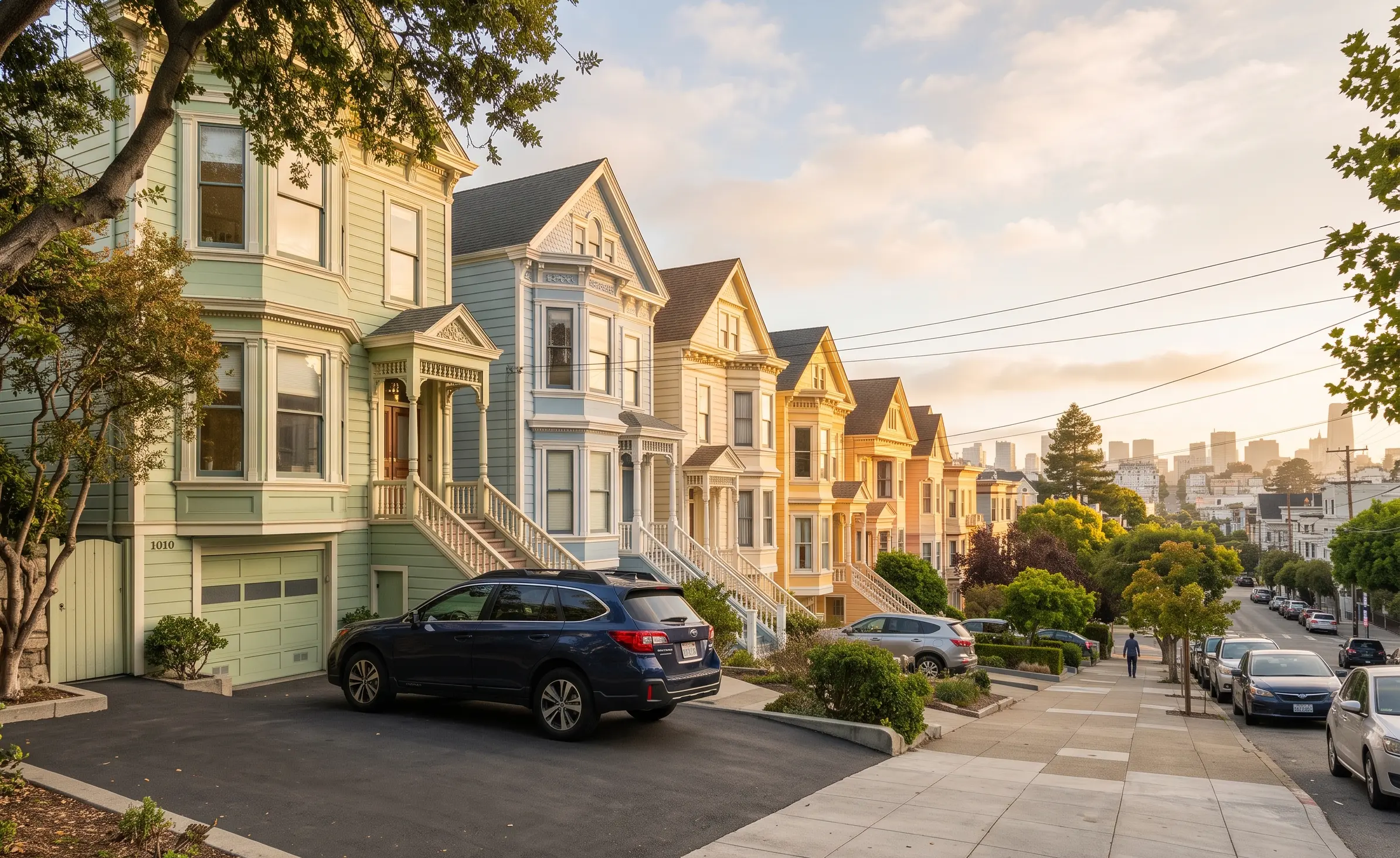
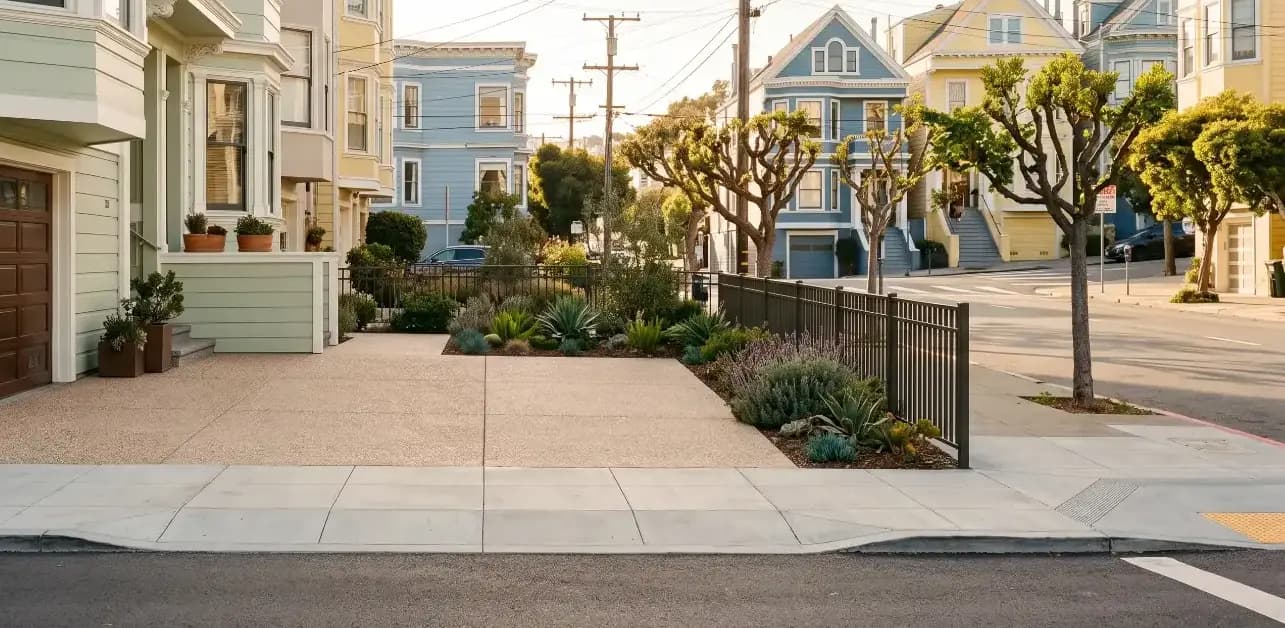
You're renting out your driveway! Honestly, that's an intimate offering. This is the space between the street and your home. People haven't been able to park there before, and now you are considering allowing strangers to pull in, just a few feet from your front door? The instinct to pause is understandable.
But take a step back. The person pulling into your driveway on EZSpot isn't a stranger who happened to find an open spot. Every user is verified before they can book anything. Once a booking is confirmed, you get the vehicle and reservation details. You know who is parked in your driveway and exactly how long it's supposed to be there.
That's the difference between a stranger in your driveway and a guest in your driveway. One of them isn't identifiable, or traceable in case of emergency. The other booked, paid, and is on record.
The Platform Matters
Peer-to-peer parking isn't a monopoly. Others have taken a swing at this, and some of them have been at it for a while. That's not a bad thing. It means the idea is something that people want, and it means that we've been able to watch what works and what doesn't.
One model we've seen is the ping. A driver needs a spot, the app pings nearby hosts, and hosts respond… assuming they see the notification in time. That means the host is now checking their phone constantly, because the earnings only show up if they're paying attention. And in our tests, they weren't paying attention.
Letting someone park in your driveway shouldn't be a side hustle.
Why should you need to work more than you already do, to make money on something you already own?
EZSpot lets you set your availability and earn without living in your notifications.
Then there is the notable dispersion within the "set your availability and let it roll" model. Others have taken this approach too, and it's the right approach. But, we've seen it implemented in a way that exposes host data before a booking ever occurs. Your address, photos of your property, notes about your gate, and more, are accessible before the spot is even booked.
That brings us back to the original question: what stops someone from coming and parking without paying? If your address and photos are sitting on a public map, the answer is nothing. Anyone can see the spot, and anyone can decide the booking step is optional.
On EZSpot, host details are not shown until a booking is made. Before that, drivers see a bubble roughly one block in diameter alongside a price. Full details are released on confirmation to a user who has already paid. Your driveway is not a public listing. It's a private space that becomes visible to one person at exactly the right time.
Drivers: "But What About Us?"
Now I know what you may be thinking. How do I book a spot confidently if I don't know what it looks like, and I don't know exactly where it is?
Good question! Privacy for the host can't mean uncertainty for the driver. That trade-off would just move the problem. So, we verify the spot ourselves. At this stage, that means someone from our team books the spot and parks in it. Not just a photo review, not just a form the host fills out, we literally drive there and confirm the listing matches reality.
This is also what makes filters trustworthy. If a driver filters for spots to fit a standard size vehicle, every spot that populates will be a spot to fit a standard vehicle. Filter for camera coverage, you'll only see spots with cameras. You get the idea. The aforementioned bubble is tight enough that you're never wondering if your spot is in a different neighborhood. You know the block and price before you commit, and you receive the address, photos, and access details the moment after you book.
This is all done deliberately. Beta drivers are getting access in stages right now, and broader access is coming soon!
The End Goal: A Seamless User Experience
Everything above is really one idea approaching from two directions. A marketplace only works when both sides are built with equal care. It's a concept that sounds obvious, but it isn't. The fastest way to launch a parking marketplace is to fill the map with listings, publish everything, and let drivers sort it out. You get supply, you get a map that looks impressive, and you get a product that leaks host data by design. The cost shows up later when hosts feel exposed, drivers show up to a spot that doesn't match, and a support burden that nobody planned for.
We'd rather build it once, and do it right. Hosts set availability and get paid without babysitting an app. Drivers get spots that are exactly what the listing said they would be. Nobody has an address exposed to the public, and nobody has plans that depend on seeing a notification.
If you're evaluating getting into the peer-to-peer parking space, here are things you should be asking any platform:
How much work will I need to put in, consistently, for this to actually pay off?
Passive income that requires constant attention isn't passive. EZSpot lets you set availability and relax.
Who sees my information, and when?
An address that is visible before someone books it leaves you unprotected. EZSpot only shows your spot's details to confirmed bookings
How does the platform protect me as a host while still supporting drivers?
If the answer only covers one side, the other side will be punished later. EZSpot is building this properly for the first time.
What happens when something goes wrong, and who do I actually talk to?
A no-show, an overstay, a car that isn't the one on the booking. EZSpot has a local support team to keep you covered, and active partnerships to handle any situation.
We built EZSpot to answer every question without hesitation.
If you've got a driveway sitting empty, list your spot! If you're a driver in San Francisco, join the waitlist and you'll be among the first in when we open up fully!